Rei Kawakubo and the Art of Fashion Without Rules
I. THE ORIGIN OF A REBELLION
Tokyo, late 1960s — a city of neon, tradition, and transformation.
In a quiet apartment near Omotesando, Rei Kawakubo begins her quiet war against beauty.
Born in 1942 in postwar Japan, she studied Fine Arts and Literature at Keio University — not fashion. But that became her strength. She entered the world of design through styling, not sewing, driven by a single question:
“Why must things be one way?”
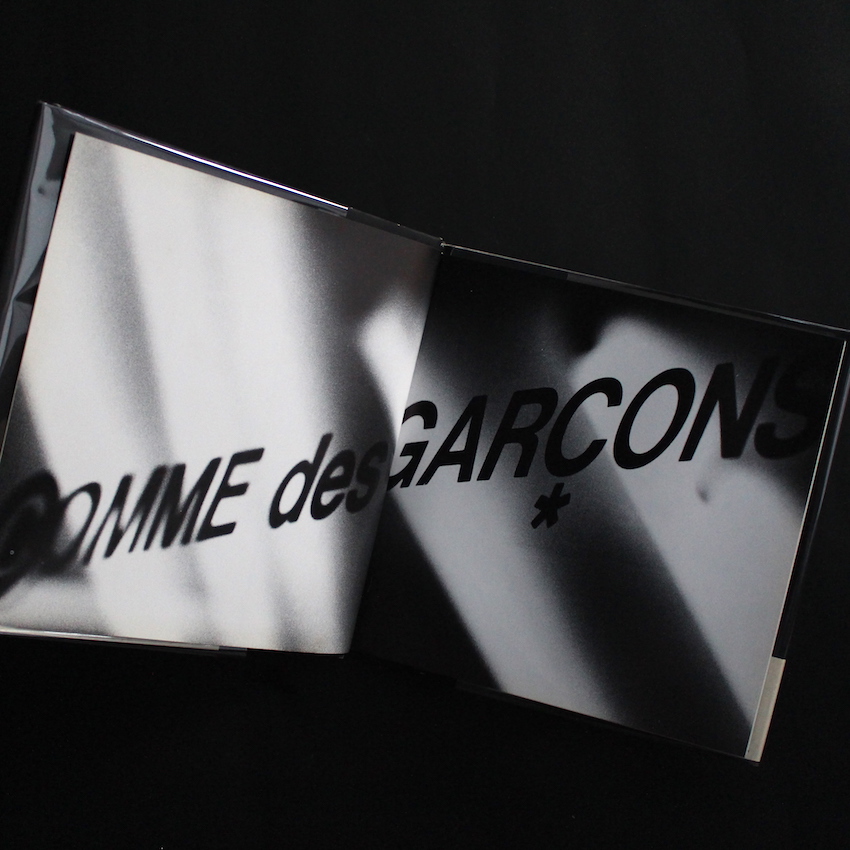
That question became the foundation of Comme des Garçons — founded officially in 1969 and incorporated in 1973.
The name, borrowed from Françoise Hardy’s song “Tous les garçons et les filles,” means “like boys.”
It signaled rebellion from the start — a challenge to gender, conformity, and the meaning of style itself.
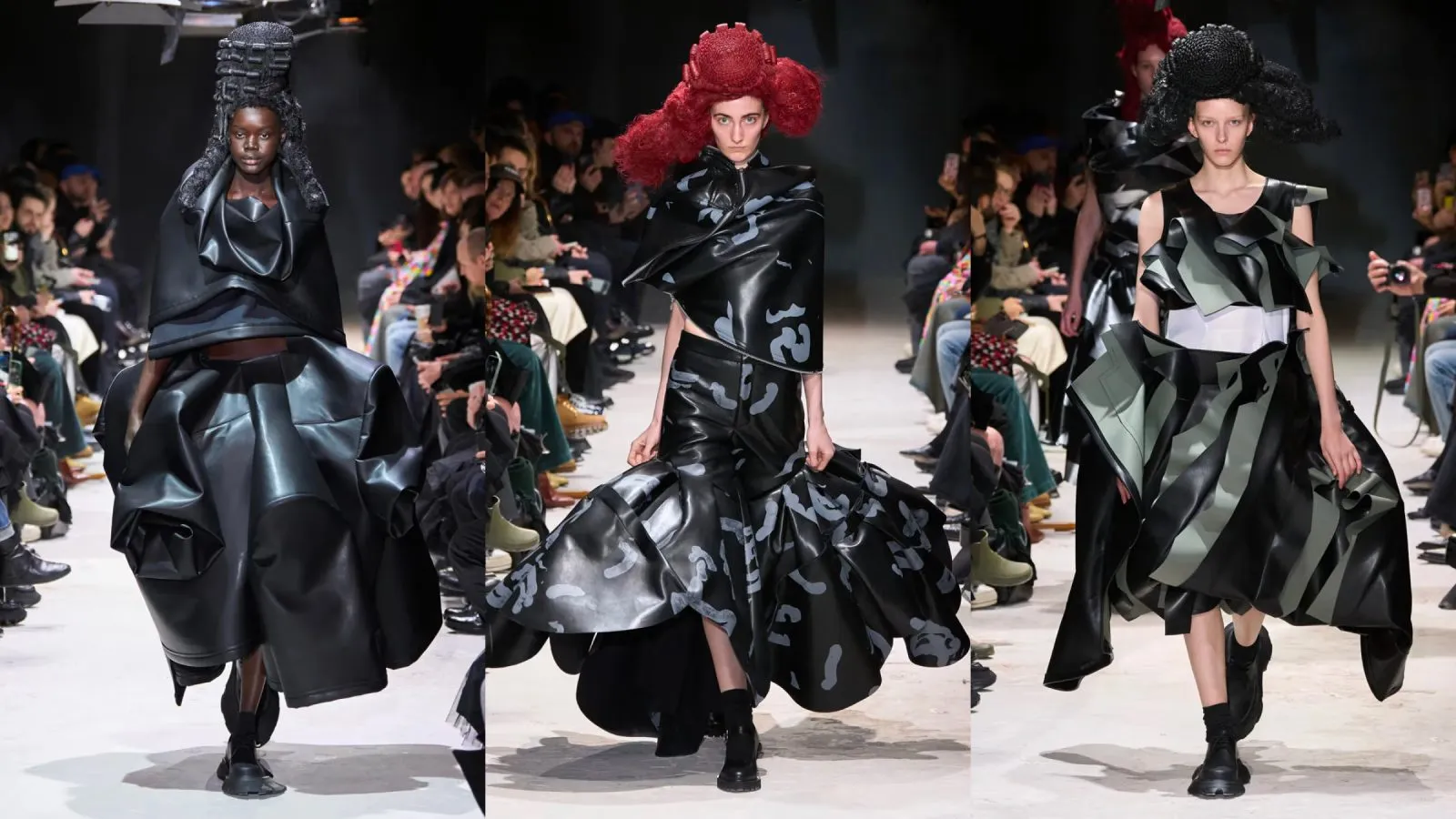
By the mid-1970s, Kawakubo’s vision had crystallized. Her clothes — mostly black, deliberately imperfect, and emotionally charged — were unlike anything in Japan’s booming fashion scene. They were anti-trend, anti-glamour, anti-everything.
Tokyo’s youth, disenchanted with mass-market chic, saw something real in her work.
A new subculture was born: the Comme des Garçons tribe — quiet, intellectual, radical.
II. THE JAPANESE REVOLUTION ARRIVES IN PARIS
The fashion world’s gaze turns toward Paris — and what it sees will never be forgotten.
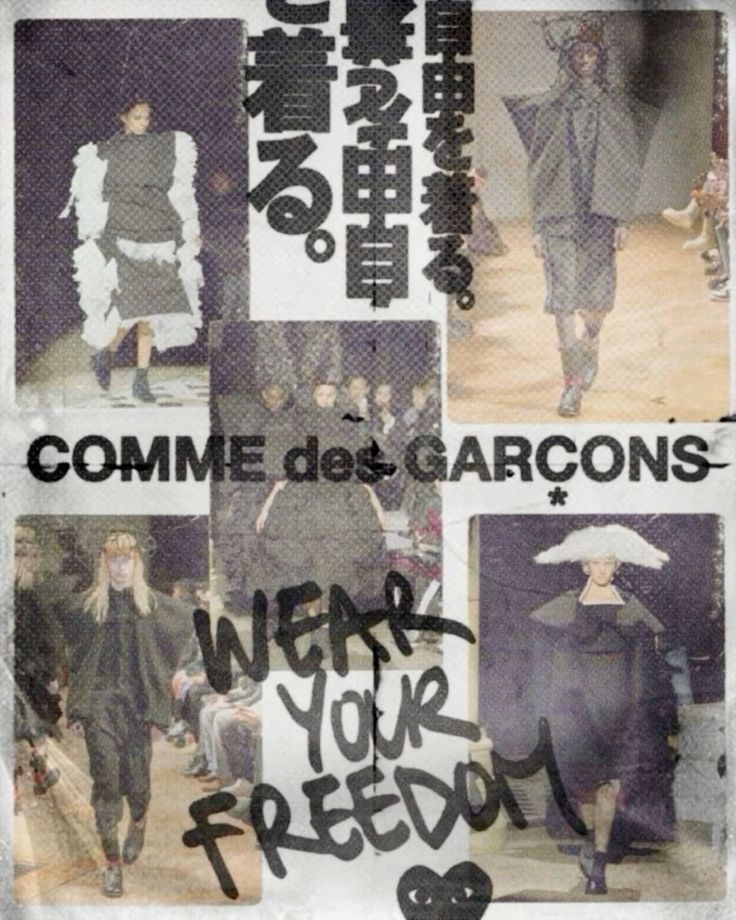
Rei Kawakubo debuts Comme des Garçons at Paris Fashion Week, alongside Yohji Yamamoto.
The reaction? Chaos.
Models drift through a gray fog of light wearing torn knits, distressed wool, and asymmetrical shapes that swallowed their bodies. There was no glamour, no seduction — only raw expression.
Critics were stunned. Some called it “Hiroshima Chic.” Others dismissed it as anti-fashion.
But a few — those who understood art — recognized a revolution.
Kawakubo didn’t care about approval.
Her work wasn’t about beauty. It was about truth.
“I’m not against beauty,” she once said. “I just think beauty can be something else.”
This was more than a collection.
It was the birth of a new fashion language — one that spoke in shape, shadow, and silence.
III. THE DECADE OF DECONSTRUCTION
The 1980s cemented Rei Kawakubo as a cultural force.
Her designs became armor for the alienated, a symbol of freedom for those who refused to fit in.
She challenged everything — symmetry, femininity, luxury.
Her shows felt less like runway presentations and more like performance art.
Key moments defined the decade:
| Year | Collection | Concept |
|---|---|---|
| 1982 | “Destroy” | Torn garments, chaos as design. |
| 1983 | “Body Meets Dress, Dress Meets Body” | Padding and distortion — redefining the body itself. |
| 1986 | “Comme des Garçons Homme Plus” | Menswear infused with fragility and provocation. |
Each collection rejected surface beauty in favor of emotional geometry — design that forced the viewer to feel.
By the late 1980s, her followers included artists, intellectuals, and visionaries who saw fashion as philosophy.
Kawakubo didn’t sell luxury. She sold meaning.
IV. A WORLD BUILT FROM BLACK
While other designers built empires, Rei Kawakubo built a worldview.
The color black — once a symbol of mourning — became her signature.
To her, black was freedom.
It erased hierarchy. It refused gender. It embodied possibility.
This aesthetic resonated across generations.
In the minimalist wave of the 1990s, Comme des Garçons stood apart — not minimalist for simplicity’s sake, but for the sake of truth stripped bare.
Her use of black inspired a new kind of consumer: the intellectual dresser.
Architects, designers, and creative thinkers adopted her style as a quiet uniform of independence.
V. BUILDING AN EMPIRE OF IDEAS (1990–2000)
By the 1990s, Comme des Garçons was more than a brand — it was an ecosystem.
Junya Watanabe, her protégé, launched his line under the brand’s wing in 1992, bringing technical innovation and textile mastery.
Tao Kurihara, Kei Ninomiya, and later Fumito Ganryu would continue the legacy.
That same year, Kawakubo released Comme des Garçons Parfum — a scent that defied logic. It smelled of tar, ink, and smoke.
Critics were puzzled; consumers were fascinated.
It sold out.
“I wanted to make something abstract. A fragrance that smelled like nothing before,” she said.
The 1990s also brought new sub-labels:
- Tricot Comme des Garçons (knitwear)
- Homme Deux (modern tailoring)
- Comme des Garçons Shirt (structure through simplicity)
Kawakubo was building what no other designer dared to build — a multi-dimensional fashion universe, governed by concept, not category.
VI. THE HEART WITH EYES: A NEW SYMBOL
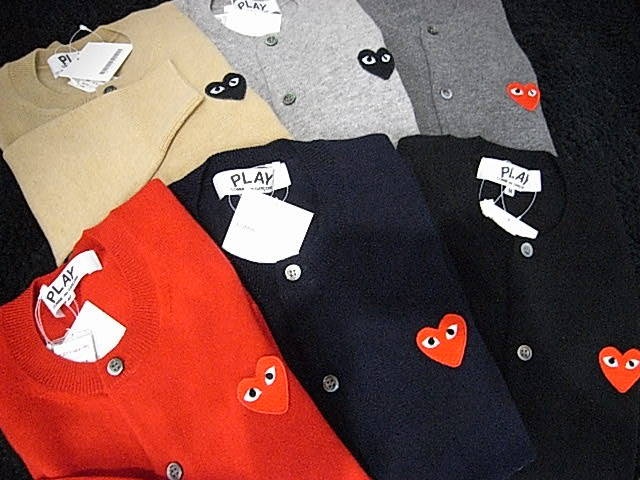
In 2002, a red heart with two curious eyes appeared.
It was Comme des Garçons PLAY, designed in collaboration with Polish artist Filip Pagowski.
PLAY was a softer side of the brand — casual, accessible, and instantly recognizable.
It opened Comme des Garçons to a new audience: younger, street-savvy, but still drawn to the house’s intellectual spirit.
The heart became a symbol of contradiction — irony wrapped in sincerity.
By the time Converse x Comme des Garçons PLAY hit stores, it was global culture.
The brand that once terrified critics was now setting streetwear standards.
And yet, Rei Kawakubo herself stayed unchanged — still in black, still in Tokyo, still asking new questions.
VII. DOVER STREET MARKET: THE LABORATORY OF CHAOS
In 2004, Kawakubo and her husband (and business visionary) Adrian Joffe opened Dover Street Market in London.
Not a store — a fashion laboratory.
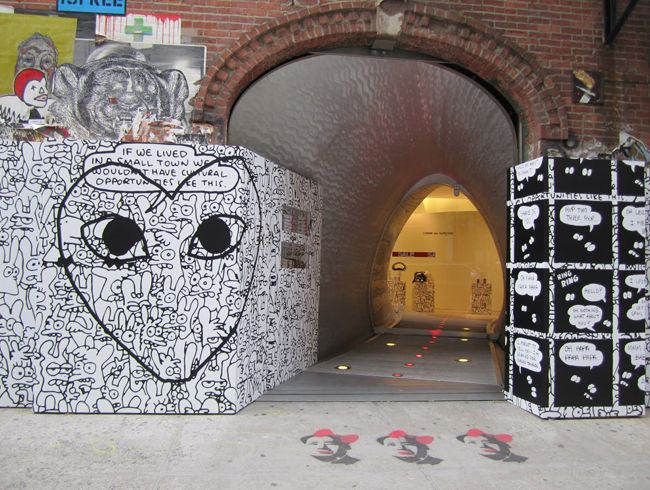
Each floor was curated like a gallery. Concrete walls, scaffolding, installations.
Brands weren’t arranged by hierarchy but by energy.
Gucci sat next to streetwear. Dior beside independent labels.
Kawakubo called it “Beautiful Chaos.”
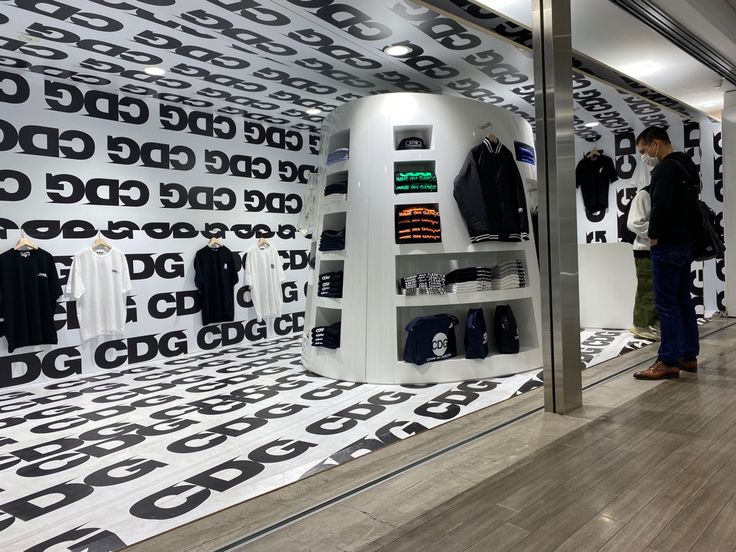
The concept expanded to Tokyo, New York, Los Angeles, Paris, and Beijing — a new retail experience where art, architecture, and commerce collided.
DSM became the spiritual home of the avant-garde.
It also became one of the most influential retail models of the 21st century.
VIII. ART AS IDENTITY (2010–2020)
The 2010s saw Rei Kawakubo evolve into something beyond fashion.
Her collections became sculptures of philosophy — exploring abstract ideas through form.
Highlights include:
| Year | Collection | Theme |
|---|---|---|
| 2012 | White Drama | Life, death, and memory — in all white. |
| 2014 | Not Making Clothes | A rejection of functionality; fashion as thought. |
| 2017 | Art of the In-Between | The Met Gala exhibition honoring Kawakubo’s philosophy. |
The 2017 Met Exhibition, curated by Andrew Bolton, was historic — Rei Kawakubo became only the second living designer ever honored with a solo show (after Yves Saint Laurent in 1983).
Her creations stood in the museum like architecture — each piece exploring dualities:
Object / Body. Structure / Fluidity. Order / Chaos.
“To break old values, you must first understand them deeply,” Kawakubo once said.
In a time when luxury leaned toward marketing and celebrity, Comme des Garçons stood apart — a symbol of intellectual resistance.
IX. FROM JAPAN TO FRANCE AND BEYOND
Comme des Garçons has always existed between worlds.
Between Tokyo’s meditative minimalism and Paris’s dramatic couture.
Between silence and spectacle.
| Element | Japanese Influence | French Expression |
|---|---|---|
| Philosophy | Wabi-sabi — imperfection and transience | Art de vivre — elegance and narrative |
| Technique | Precision, restraint | Drama, construction |
| Emotion | Stillness | Theatricality |
This duality defines every Comme des Garçons piece — calm and chaos coexisting in perfect imbalance.
It is this cultural conversation that made the brand timeless.
Kawakubo didn’t simply take Japan to France.
She took the Japanese spirit of questioning and planted it in the heart of European tradition — creating a third space where nothing had existed before.
X. THE WOMAN, THE MIND, THE MYTH
Rei Kawakubo remains famously private.
She rarely explains her collections, rarely appears in public.
She doesn’t design for approval — she designs for necessity.
In interviews, she often answers in fragments.
Her favorite response to interpretation:
“I don’t know.”
Yet her silence speaks louder than any campaign.
It invites curiosity — forcing the audience to engage, think, and feel.
Her work rejects gender, trends, and even time.
Each collection exists as a philosophical question:
What is beauty?
What is form?
What is human?
She designs not from concept boards or digital tools, but from instinct — sculpting fabric directly on mannequins until emotion appears.
That process — raw, intuitive, mysterious — is her language.
XI. THE PRESENT AND THE FUTURE
Today, Comme des Garçons remains fiercely independent — a rare feat in a fashion world dominated by conglomerates.
The company, based in Tokyo’s Aoyama district, continues to operate on its own rhythm.
Each collection arrives like a riddle — unpredictable, uncompromising, unforgettable.
Kawakubo’s protégés — Junya Watanabe, Kei Ninomiya, Noir Kei Ninomiya, and others — extend her legacy, exploring structure, light, and technology through the same lens of conceptual emotion.
In recent years, Rei has reflected on digital culture and its impact on creativity.
Her work now explores the tension between real and virtual — between identity and performance.
But her essence remains unchanged:
To create something the world hasn’t yet imagined.
“If it already exists, I’m not interested.”
XII. LEGACY: THE BEAUTY OF CONTRADICTION
Rei Kawakubo’s impact extends far beyond fashion.
She changed how we see creativity itself — proving that art and commerce, simplicity and chaos, Japan and France can coexist without losing their essence.
She inspired generations:
- Martin Margiela — deconstruction as poetry.
- Rick Owens — architectural emotion.
- Demna Gvasalia — irony as rebellion.
- Virgil Abloh — concept as culture.
Every contemporary designer who questions the system owes a debt to her.
Her true legacy is not just in clothes, but in thought — the belief that fashion can be intellectual, emotional, even uncomfortable.
And that discomfort is where progress begins.
XIII. THE CONCLUSION — A BRAND THAT DEFIES TIME
More than half a century after its birth, Comme des Garçons remains unique.
It’s not luxury in the traditional sense.
It’s not fashion for fashion’s sake.
It is a way of thinking — a mirror for what’s changing in us.
From the narrow streets of Tokyo to the grand salons of Paris, Rei Kawakubo has carried one simple idea:
To destroy, in order to rebuild.
And in doing so, she gave us one of the greatest artistic journeys in modern history.
“The only constant,” she says, “is the need to keep creating new worlds.”
Comme des Garçons continues — not as a brand, but as a living philosophy.
A quiet revolution that began in black, and still shapes the color of the future.